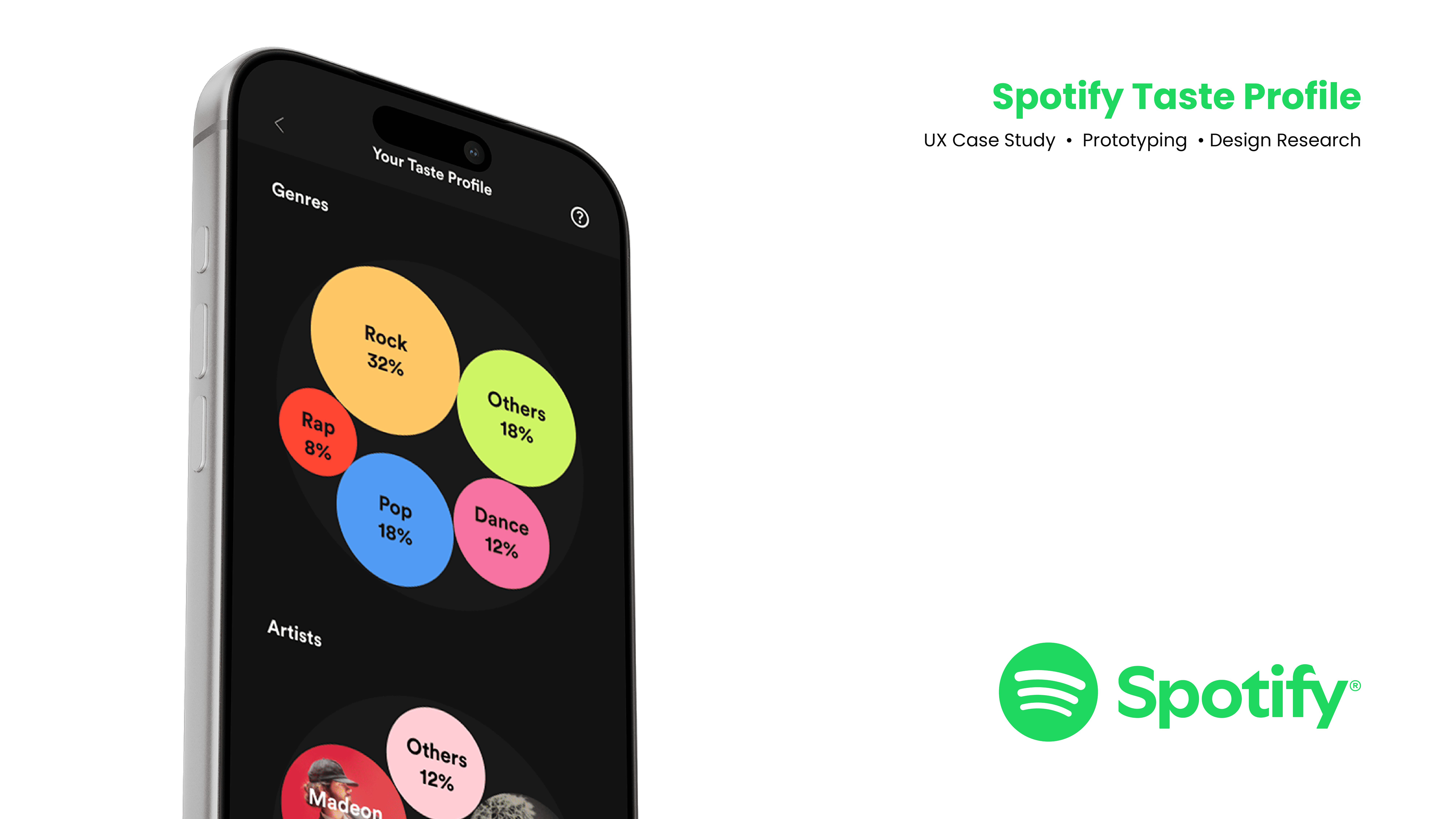
Spotify Taste Profile
Duration
4 Months
Figma
Tools
Overview
This project was developed as part of my Contemporary Problems in Interaction Design course, where the theme was Data Transparency. The goal was to explore how digital products collect, communicate, and give users control over their data.
For my case study, I focused on Spotify, a platform that personalizes every listening experience through complex data collection. While this personalization feels seamless, users rarely understand how their actions shape what they hear. My concept, the Spotify Taste Profile reimagines how Spotify could make its data use more transparent and empowering.
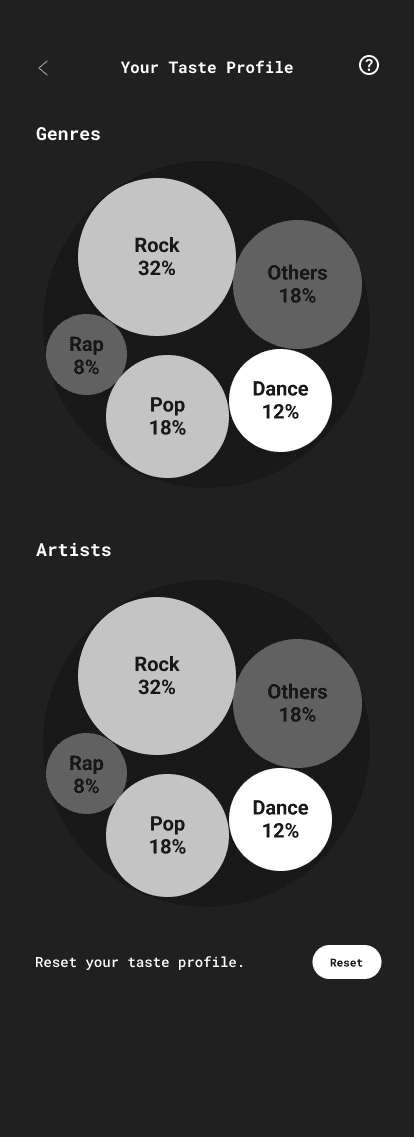
The feature visualizes users’ listening identities through interactive genre and artist data while giving them the option to reset or view how their music habits influence recommendations.
Research
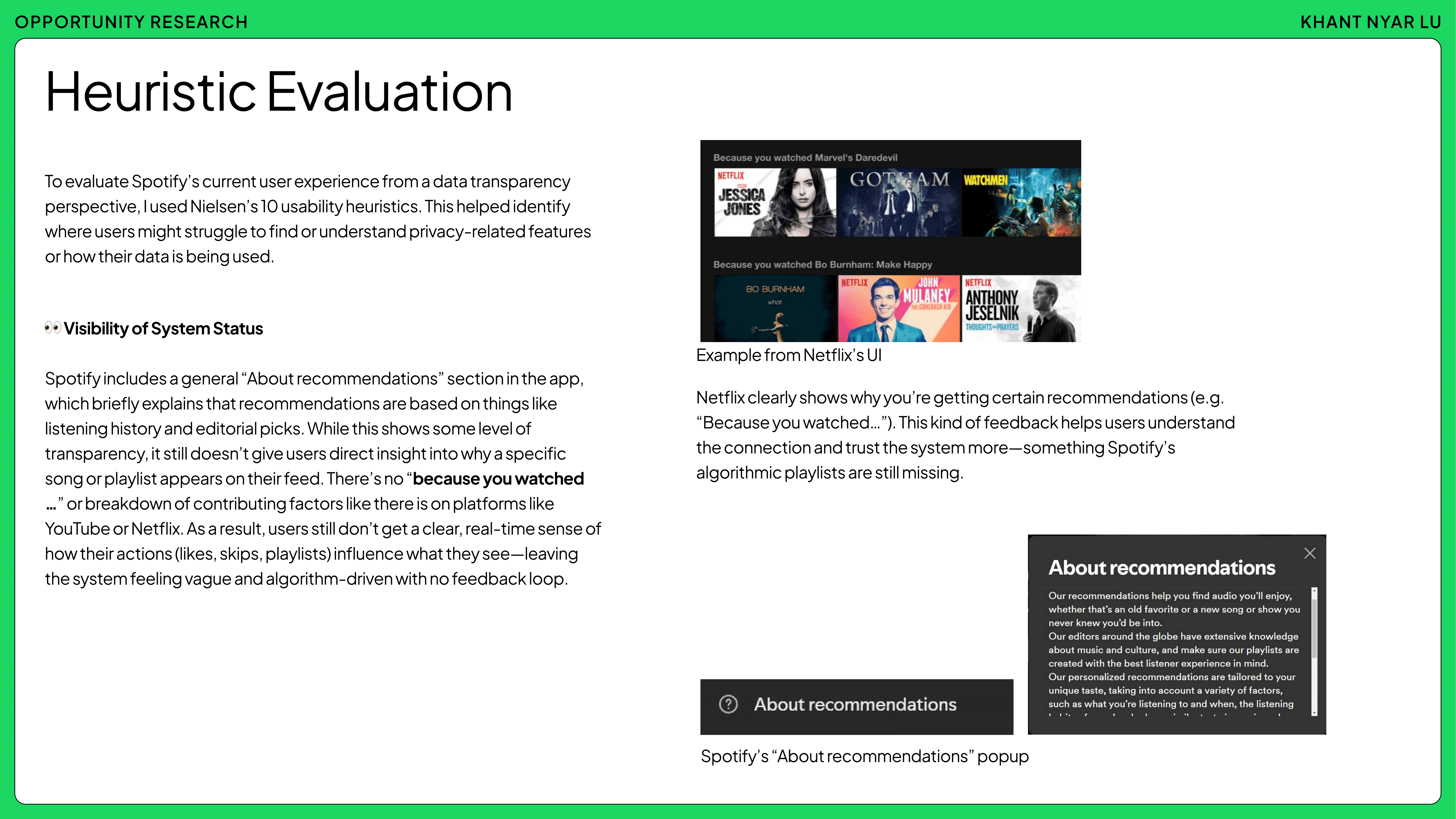
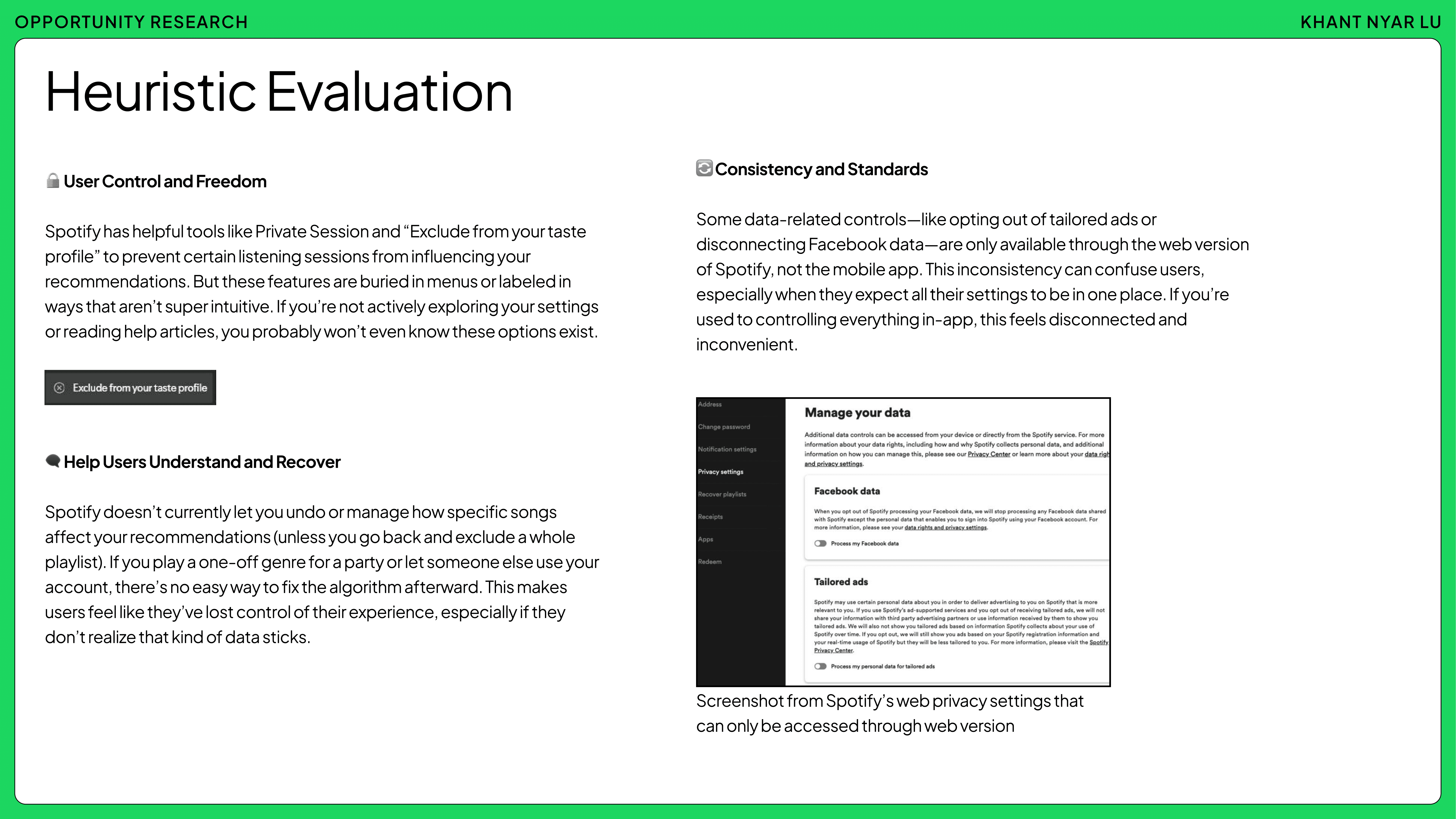
Through heuristic evaluation using Nielsen’s 10 Usability Heuristics, I analyzed Spotify’s privacy and recommendation systems. I found that:
Data controls are buried in menus or only on the web version, not in the app.
There’s no real-time feedback explaining why a song is recommended.
Users have limited recovery options if they accidentally influence their recommendations.
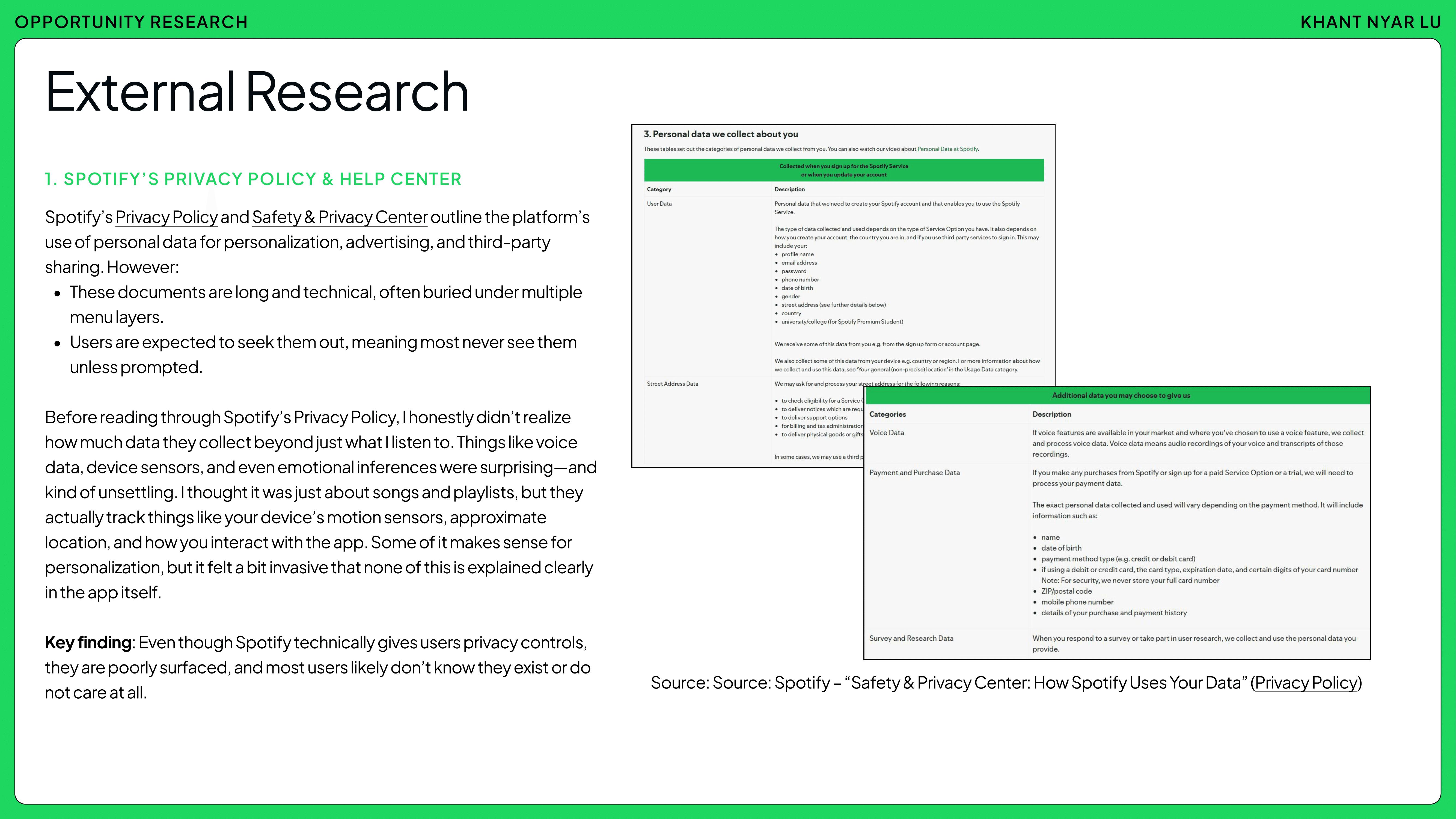
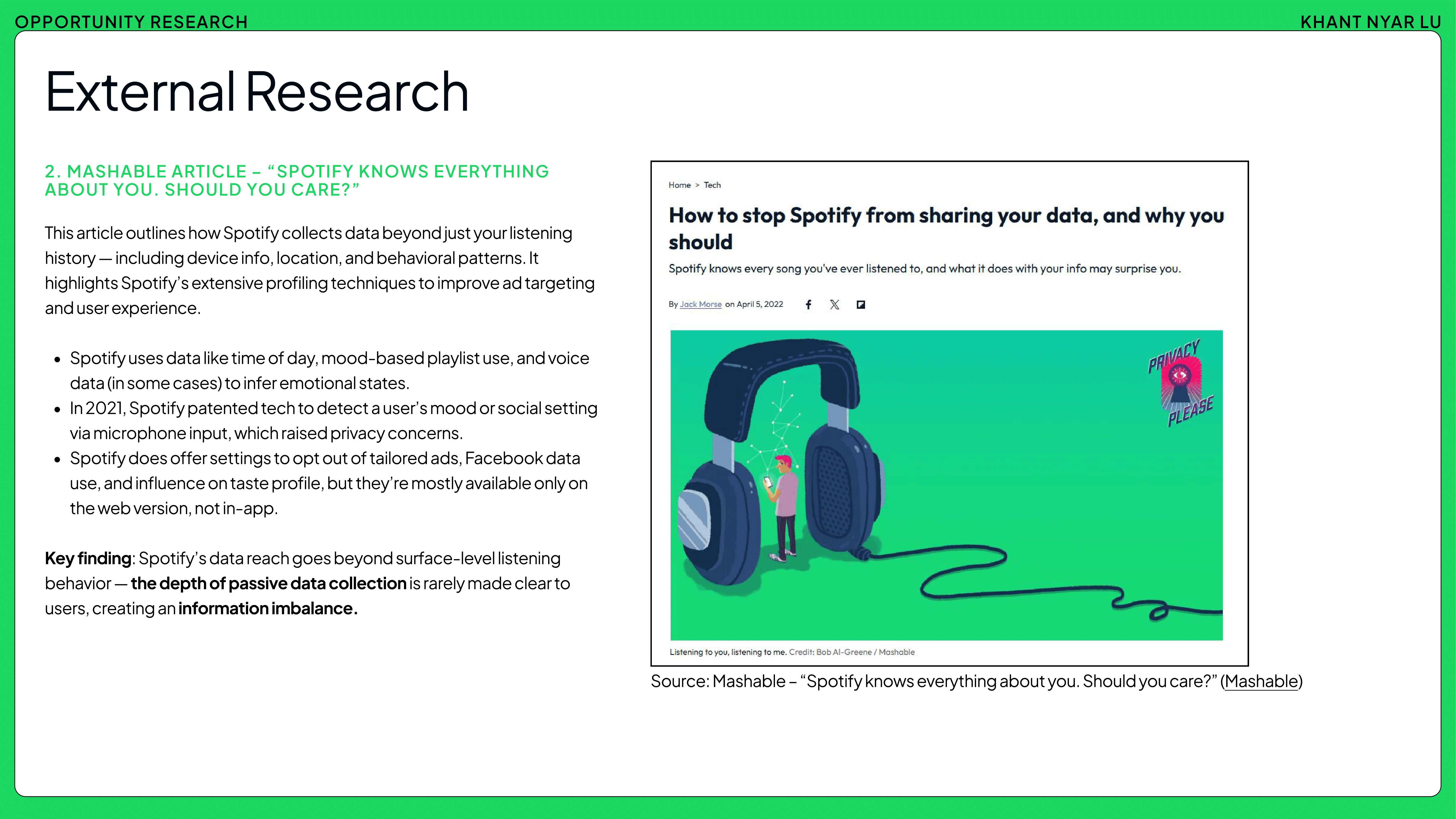
External research (from Mashable, Spotify’s Privacy Policy, and Search Logistics) also revealed that Spotify collects extensive data beyond listening history, including device info, location, and emotional inferences, but communicates this poorly.
Opportunity Areas
From these insights, several design opportunities for my project emerged:
Show why a song is recommended — add explanations like “Because you listened to {artist's name}.”
Create a Taste Profile dashboard — visualize user data and its influence.
Add an in-app privacy center — consolidate controls within the app.
Enable smarter incognito listening — make “Private Session” visible and clear.
Add recommendation feedback — let users fine-tune algorithm accuracy
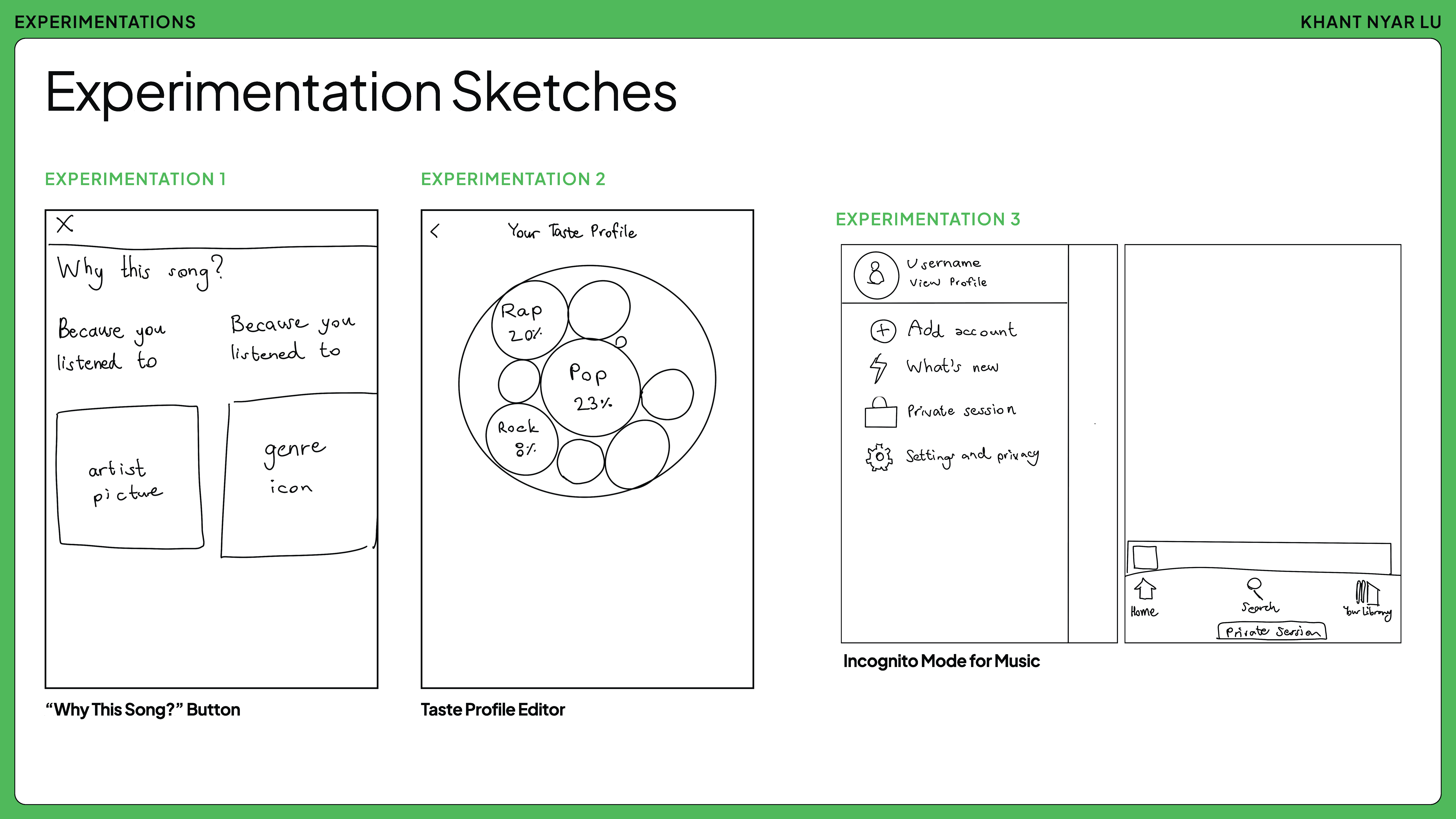
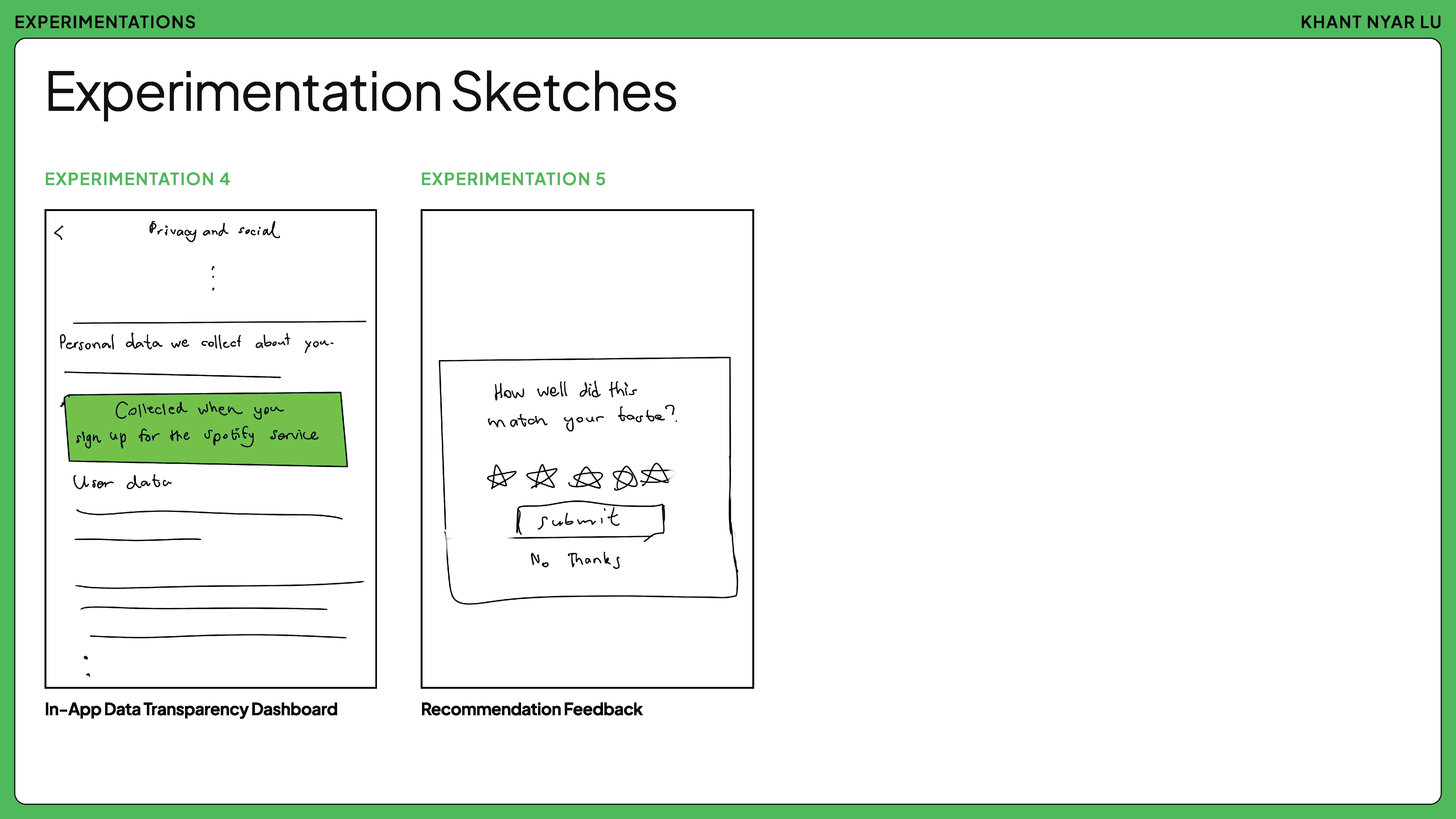
I chose to focus on the Taste Profile Dashboard concept which is a feature that visualizes how users’ listening data shapes their recommendations. From there, I set out to design low-fidelity and high-fidelity prototypes
Low-fi Prototype
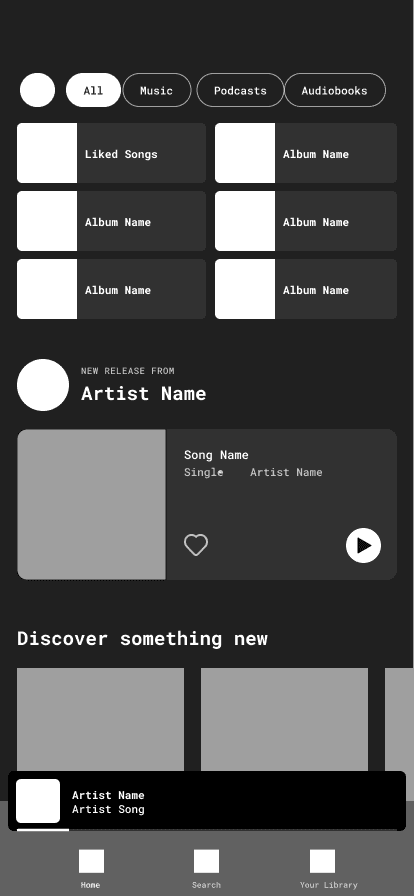
Hi-fi Prototype
How my solution gives user more control?
Transparency: Users can now view the data Spotify is using to shape their experience. No more guessing why a certain song showed up.
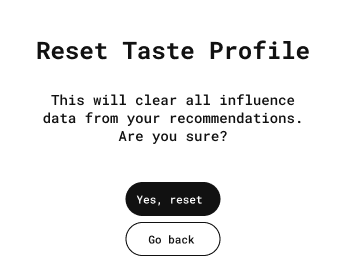
Reset Option: The “Reset Taste Profile” feature gives users control to wipe their listening influence and start fresh, something that wasn’t accessible before.
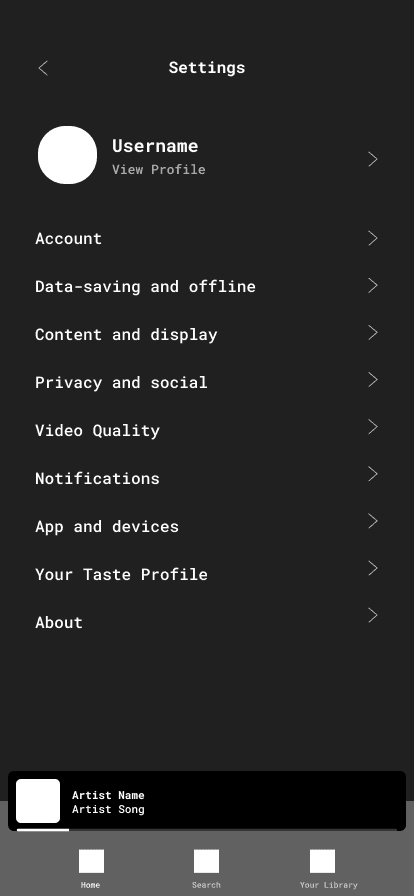
Mobile-first UI: Since most Spotify users access the app on mobile, I designed this flow directly inside the mobile settings, making it natural and intuitive to find.
What it solves?
Spotify currently personalizes content using a hidden data profile built from listening history, but users have no clear way to see or understand what’s influencing their recommendations. My design solves this by:
Surfacing the user’s top genres and artists in a visual, easy-to-understand layout.
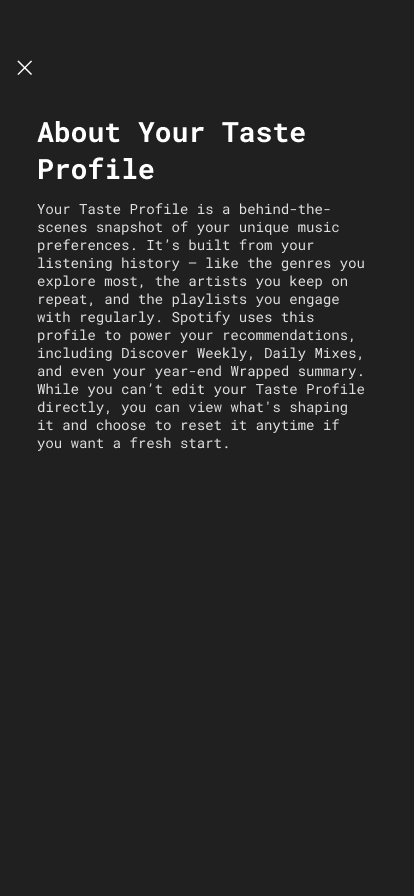
Providing an "About Your Taste Profile" explanation so users know what it is and how it affects features like Discover Weekly and Wrapped.
Offering a clear and safe way to reset their taste profile if recommendations no longer reflect their current music interests.
Working on this project really opened my eyes to how much design can shape the way people understand data and trust technology. Before this, I mostly thought about UI in terms of visuals and usability, but diving into data transparency made me realize how design also communicates ethics and accountability. I learned how to turn complex research into something people can actually see and interact with, and it made me more confident in balancing creativity with clarity. Overall, it taught me that good design isn’t just about how it looks or feels — it’s also about how honest it is.
Hey, you made it to the bottom 👋
Let’s create something fun together → khantnyarlu2021@gmail.com
Built and designed by Khant Nyar Lu
© 2025 Khant Nyar Lu. All rights reserved.